Some U.S. Companies now offer pet insurance as a benefit to their employees. Fortune 500 companies that offer pet insurance as a benefit are Hewlett-Packard (HPQ), Amazon (AMZN), Procter & Gamble (PG) and Ford Motor (F). Others companies are Chipotle Mexican Grill (CMG) and Staples (SPLS).
Chipotle began offering the benefit in 2002. Covering one pet costs $10 to $57 a month, depending on coverage plans and deductible. But only about 100 of the eatery chain's 3,000 eligible employees get the insurance because its mostly younger employees have other financial priorities.
Friday, September 27, 2013

Wednesday, September 18, 2013
Fed may send mortgage rates higher
Experts in housing markets are closlyh monitoring the Federal Reserve as they nervously await word on whether the agency will start pulling back on its controversial stimulus program, known as quantitative easing according to a report on CCN.
The Fed has been buying $85 billion in mortgage-backed securities and Treasury bonds a month to help support the economy since September last year. The purchases have been credited for the historically low mortgage rates seen this year, which ultimately helped stimulate home sales and boost prices.
Doug Duncan, chief economist for Fannie Mae said that the Fed is expected to announce that it will scale back on its bond-buying program which is expected to cause rates to slowly rise.
The mortgage market has already factored in a modest cutback in the Fed's purchases. Mortgage rates have risen 1.2 percentage points since May when Fed chairman Ben Bernanke mentioned the possibility of reducing the agency's bond-buying program. In June, he noted that the tapering could begin as early as September, if the economic recovery continued on course.
However, even if the Fed started cutting back on its bond purchases this month, many don't expect the cuts to be sizable. "The recovery has been weaker the past couple of months than what the Fed had been talking about," said Duncan. "It would be a surprise if they act aggressively."
Source CNN Money
The Fed has been buying $85 billion in mortgage-backed securities and Treasury bonds a month to help support the economy since September last year. The purchases have been credited for the historically low mortgage rates seen this year, which ultimately helped stimulate home sales and boost prices.
Doug Duncan, chief economist for Fannie Mae said that the Fed is expected to announce that it will scale back on its bond-buying program which is expected to cause rates to slowly rise.
The mortgage market has already factored in a modest cutback in the Fed's purchases. Mortgage rates have risen 1.2 percentage points since May when Fed chairman Ben Bernanke mentioned the possibility of reducing the agency's bond-buying program. In June, he noted that the tapering could begin as early as September, if the economic recovery continued on course.
However, even if the Fed started cutting back on its bond purchases this month, many don't expect the cuts to be sizable. "The recovery has been weaker the past couple of months than what the Fed had been talking about," said Duncan. "It would be a surprise if they act aggressively."
Source CNN Money
Wednesday, September 4, 2013
Unemployment Insurance
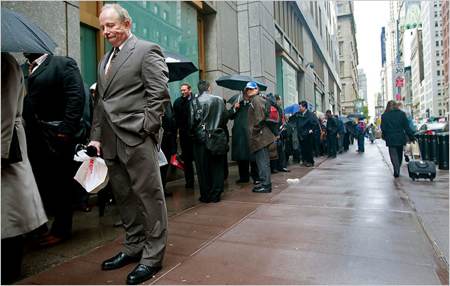
Unemployment Insurance also known as Unemployment benefits, unemployment compensation, or the dole are social welfare payments made by the state or other authorized bodies to unemployed people. Benefits may be based on a compulsory para-governmental insurance system. Depending on the jurisdiction and the status of the person, those sums may be small, covering only basic needs, or may compensate the lost time proportionally to the previous earned salary.
Unemployment benefits are generally given only to those registering as unemployed, and often on conditions ensuring that they seek work and do not currently have a job.
In some countries, a significant proportion of unemployment benefits are distributed by trade/labour unions, an arrangement known as the Ghent system.
The idea of unemployment insurance in the United States originated in Wisconsin in 1932. There are about 50 state unemployment insurance programs plus one each in the District of Columbia, Puerto Rico and United States Virgin Islands. Through the Social Security Act of 1935, the federal government of the United States effectively encouraged the individual states to adopt unemployment insurance plans.
Are you eligible?
People that are out of work who do not qualify for unemployment insurance include part-time, temporary, and self-employed workers, and school graduates.
Here are reasons unemployment benefits would be declined:
1. not being able or available to work
2. voluntary separation from work without a good cause
3. discharge connected to misconduct
4. refusal of suitable work
5. unemployment resulting from a labor dispute
6. Failing a drug test
7. Committing fraud
8. Receiving severance pay
9. Getting freelance assignments
Generally, the worker must be unemployed through no fault of his/her own. The unemployed person must also meet state requirements for wages earned or time worked during an established period of time (referred to as a “base period”) to be eligible for benefits. In most states, the base period is usually the first four out of the last five completed calendar quarters prior to the time that the claim is filed. Unemployment benefits are based on reported covered quarterly earnings. The amount of earnings and the number of quarters worked are used to determine the length and value of the unemployment benefit. The average weekly payment is $293.
As a result of the American Recovery and Reinvestment Act passed by Congress in February 2009, many unemployed people can receive up to 99 weeks of unemployment benefits; this may depend on State legislation. Before the passage of the American Recovery and Reinvestment Act, the maximum number of weeks allowed was 26.
Quitting does not automatically disqualifies you from unemployment compensation. You can quit and still get benefits.
Maximum weekly benefits range from a low of about $200 in Alabama, Florida, Mississippi, South Dakota and Arizona to a high of about $600 in Massachusetts, New Jersey, and Washington.
Whether you can quit and still qualify for unemployment benefits also varies from state to state. So before you quit, check the laws in your state.
If you quit because your employer basically leaves you no other option, you may still be able to collect unemployment benefits. Here are some reasons for quitting that may fall into this category:
1. Lack of work. If your employer stops giving you work, or cuts your hours severely, you’ll probably still qualify for unemployment benefits. Some employers try this as a trick to avoid paying increased premiums. Apply anyway.
2. Constructive discharge. If working conditions are so intolerable that no reasonable person would stay, you may have been constructively discharged, which means that unemployment will treat quitting the same as if you were fired without cause. Constructive discharge is really tough to prove, so make sure your situation is severe before you quit. Sexual harassment, dangerous working conditions that the company won’t fix, or demanding that you participate in illegal activities may justify quitting and still qualify you for unemployment. Demotion, changes in job duties and pay cuts may also be constructive discharge.
3. Medical reasons. In some states, having a medical condition that keeps you from working won’t disqualify you. In others, it will, or you might not qualify unless work caused or aggravated the medical condition.
4. Domestic violence. Some states allow employees who must quit because of domestic violence to qualify for unemployment benefits.
5 .Caring for a family member who is ill. Some states allow employees who must quit to care for a seriously ill family member to qualify.
Tuesday, August 27, 2013
Zurich Insurance Finance Chief Wauthier Found Dead

Zurich Insurance Group AG (ZURN), the biggest Swiss insurer, announced that their Chief Financial Officer Pierre Wauthier,53 was found dead at his home yesterday.
Police officers are investigating how he died, the company said in an e-mailed statement late yesterday. They declined to disclose further details. Officials found no indications of third-party involvement in the death, Marcel Schlatter, a police spokesman said.
“The board of directors, group executive committee and all of our colleagues are deeply saddened and pass on our condolences to the family and relatives,” Chief Executive Officer Martin Senn said in the statement.
The police ordered an autopsy to determine the cause of death, according to Schlatter. He said that Wauthier lived in Walchwil, a municipality with about 3,591 residents on the eastern shore of Lake Zug.
KPMG, JPMorgan
Wauthier, who held a master’s degree in international finance from l’Ecole des Hautes Etudes Commerciales and a Masters in private law from the Sorbonne University in Paris, began his career at KPMG in 1982, according to Zurich Insurance’s website. He worked for two years at the French Ministry of Foreign Affairs and joined JPMorgan Chase & Co. (JPM:US) in 1985, before taking on the job at Zurich Insurance.
Zurich Insurance, based in Zurich, said on Aug. 15 that floods in central Europe and tornadoes in the U.S. contributed to a 27 percent decline in second-quarter net income to $789 million, missing analysts’ estimates.
The shares fell 1.8 percent to 239 francs by 10:48 a.m. in Zurich, valuing the company at 35.4 billion francs ($38 billion).
Tuesday, August 20, 2013
States foresee more insurance customers
WASHINGTON — USA TODAY made a survey and shows that from the 19 states operating health insurance exchanges to help the uninsured find coverage, at least 8.5 million will use the exchanges to buy insurance. That would far outstrip the federal government's estimate of 7 million new customers for all 50 states under the 2010 health care law.
USA TODAY contacted the 50 states, and 19 had estimates for how many of their uninsured residents they expect will buy through the exchanges. About 48 million Americans were uninsured in 2011, according to the Kaiser Family Foundation.
Under the law, also known as the Affordable Care Act, people without health insurance provided by their employers, the government or their parents will have to buy insurance on the exchanges, which are websites where they can compare prices and choose policies. They will pay a fine if they decline to buy the insurance.
To stay financially viable, insurers need healthy people to help round out the costs of those with chronic conditions. The non-partisan Congressional Budget Office did its own research to determine 7 million people would enroll for the 2014 exchanges.
California alone said it expected to sign up 5.3 million people.
To diversify the health of the pool, the Department of Health and Human Services has targeted three states where half of uninsured people ages 18 to 35 live: Texas, Florida and California.
The states said they made their estimates based on how many individuals are uninsured and aren't likely to become insured by an employer, what insurers in their states expect and conversations with HHS about reasonable goals.
Source: USA Today
USA TODAY contacted the 50 states, and 19 had estimates for how many of their uninsured residents they expect will buy through the exchanges. About 48 million Americans were uninsured in 2011, according to the Kaiser Family Foundation.
Under the law, also known as the Affordable Care Act, people without health insurance provided by their employers, the government or their parents will have to buy insurance on the exchanges, which are websites where they can compare prices and choose policies. They will pay a fine if they decline to buy the insurance.
To stay financially viable, insurers need healthy people to help round out the costs of those with chronic conditions. The non-partisan Congressional Budget Office did its own research to determine 7 million people would enroll for the 2014 exchanges.
California alone said it expected to sign up 5.3 million people.
To diversify the health of the pool, the Department of Health and Human Services has targeted three states where half of uninsured people ages 18 to 35 live: Texas, Florida and California.
The states said they made their estimates based on how many individuals are uninsured and aren't likely to become insured by an employer, what insurers in their states expect and conversations with HHS about reasonable goals.
Source: USA Today
Tuesday, August 13, 2013
White House Reaffirms Housing Importance for Consumers and Government's Role in Protecting Middle Class Renters and Homeowners
President Obama outlined a coordinated set of initiatives to build on the housing economy’s emerging recovery which is an important step in reaffirming housing’s importance to American consumers, whether they are renters or owners.
Consumer Federation of America said in a statement released after the speech in Phoenix, AZ: “Access to sustainable, affordable home finance has been a fundamental supporting pillar of the American dream,” said Barry Zigas, CFA’s Director of Housing Policy. “President Obama’s speech reaffirmed that fact. The policies he outlined are important, positive steps that will help Americans build economic and family security through a strong and resilient housing economy.”
Importantly, Zigas noted, Obama’s speech recognized that while the overall economy shows steady improvement, and housing prices have stabilized or even increased significantly in many markets, millions of American homeowners remain mired in the wreckage left by a spree of unregulated, unscrupulous speculation and reckless behavior by Wall Street banks, mortgage brokers and investors. The speech promised much needed continuation of existing rescue programs like HAMP and HARP, and increased focus on spending the $7.6 billion provided to the so-called “hardest hit states” with the highest rates of home foreclosures.
“The banking system has been too slow to rectify the mistakes that led to the financial crisis,” Zigas said. “We applaud the fact that more than 1 million homeowners have received mortgage modifications under HAMP, and several million more reduced their mortgage payments through refinancing into lower interest rates. But much more remains to be done, and today’s speech gives those families renewed hope that help is on the way.”
The speech also focused on the high rent burdens facing increasing numbers of renters, including middle income wage earners. Families’ ability to save for important life events, including education, retirement and the down payment for a home is compromised if their rent eats up most of their paycheck.
“The Low Income Housing Tax Credit and rental assistance programs are critically important in our current economy, where stagnant wages and persistent under-employment challenge even the most dedicated housing developers,” Zigas said. “Support for existing programs, and expanding them, even in a constrained budget environment, is an investment in critical economic and social infrastructure.”
Access to Mortgage Credit
Millions of consumers today are locked out of mortgage financing because lenders and Fannie Mae and Freddie Mac have reacted to the mortgage crisis by going too far in restricting credit. The President’s call for clarity in underwriting and credit decisions is important, but needs to be accompanied by an equally forceful message to the lending community that the billions of dollars extended by the federal government to restore their balance sheets must be coupled with a commitment by those same banks to help everyday American families with sustainable, affordable loans.
“Credit today is far tighter than it was when homeownership rates were rising and responsible, sustainable credit was available through fully documented, long term fixed rate loans in the 1990’s and early 2000’s,” Zigas said. “Lenders need to get back in the market with those products. Today’s speech is a good step, but this dance requires both partners to get on the floor.”
Mortgage Finance Reform
Today’s speech is the Administration’s first policy proposal on the future of the US mortgage finance system since its White Paper in 2011. That paper outlined a series of options, but did not endorse a specific approach.
“Today’s speech puts the Administration squarely behind the important role that government must play in assuring that consumers of the future enjoy the same access to affordable, sustainable mortgage credit that their parents and grandparents did,” Zigas said. “The President’s announced proposals track closely those of the Bipartisan Policy Center’s housing commission, and proposals made by many organizations in recent years, including CFA,” Zigas noted. (Zigas serves as a member of the BPC housing commission.) “Together with emerging bipartisan proposals like that offered in the Senate by Sens Corker, Warner and their colleagues today’s announcement should accelerate the important work of restoring a durable housing finance structure for US consumers.”
FHFA Leadership
CFA strongly supports the President’s call for swift action on the pending nomination of Rep. Mel Watt to be Director of the Federal Housing Finance Agency (FHFA). “As overseer of the two biggest sources of mortgage financing for consumers today,” Zigas said, “it is long past time when the agency should be led by an appointed and confirmed Director. CFA joins the White House in urging Senate action on the pending nomination.”
Consumer Federation of America said in a statement released after the speech in Phoenix, AZ: “Access to sustainable, affordable home finance has been a fundamental supporting pillar of the American dream,” said Barry Zigas, CFA’s Director of Housing Policy. “President Obama’s speech reaffirmed that fact. The policies he outlined are important, positive steps that will help Americans build economic and family security through a strong and resilient housing economy.”
Importantly, Zigas noted, Obama’s speech recognized that while the overall economy shows steady improvement, and housing prices have stabilized or even increased significantly in many markets, millions of American homeowners remain mired in the wreckage left by a spree of unregulated, unscrupulous speculation and reckless behavior by Wall Street banks, mortgage brokers and investors. The speech promised much needed continuation of existing rescue programs like HAMP and HARP, and increased focus on spending the $7.6 billion provided to the so-called “hardest hit states” with the highest rates of home foreclosures.
“The banking system has been too slow to rectify the mistakes that led to the financial crisis,” Zigas said. “We applaud the fact that more than 1 million homeowners have received mortgage modifications under HAMP, and several million more reduced their mortgage payments through refinancing into lower interest rates. But much more remains to be done, and today’s speech gives those families renewed hope that help is on the way.”
The speech also focused on the high rent burdens facing increasing numbers of renters, including middle income wage earners. Families’ ability to save for important life events, including education, retirement and the down payment for a home is compromised if their rent eats up most of their paycheck.
“The Low Income Housing Tax Credit and rental assistance programs are critically important in our current economy, where stagnant wages and persistent under-employment challenge even the most dedicated housing developers,” Zigas said. “Support for existing programs, and expanding them, even in a constrained budget environment, is an investment in critical economic and social infrastructure.”
Access to Mortgage Credit
Millions of consumers today are locked out of mortgage financing because lenders and Fannie Mae and Freddie Mac have reacted to the mortgage crisis by going too far in restricting credit. The President’s call for clarity in underwriting and credit decisions is important, but needs to be accompanied by an equally forceful message to the lending community that the billions of dollars extended by the federal government to restore their balance sheets must be coupled with a commitment by those same banks to help everyday American families with sustainable, affordable loans.
“Credit today is far tighter than it was when homeownership rates were rising and responsible, sustainable credit was available through fully documented, long term fixed rate loans in the 1990’s and early 2000’s,” Zigas said. “Lenders need to get back in the market with those products. Today’s speech is a good step, but this dance requires both partners to get on the floor.”
Mortgage Finance Reform
Today’s speech is the Administration’s first policy proposal on the future of the US mortgage finance system since its White Paper in 2011. That paper outlined a series of options, but did not endorse a specific approach.
“Today’s speech puts the Administration squarely behind the important role that government must play in assuring that consumers of the future enjoy the same access to affordable, sustainable mortgage credit that their parents and grandparents did,” Zigas said. “The President’s announced proposals track closely those of the Bipartisan Policy Center’s housing commission, and proposals made by many organizations in recent years, including CFA,” Zigas noted. (Zigas serves as a member of the BPC housing commission.) “Together with emerging bipartisan proposals like that offered in the Senate by Sens Corker, Warner and their colleagues today’s announcement should accelerate the important work of restoring a durable housing finance structure for US consumers.”
FHFA Leadership
CFA strongly supports the President’s call for swift action on the pending nomination of Rep. Mel Watt to be Director of the Federal Housing Finance Agency (FHFA). “As overseer of the two biggest sources of mortgage financing for consumers today,” Zigas said, “it is long past time when the agency should be led by an appointed and confirmed Director. CFA joins the White House in urging Senate action on the pending nomination.”
Friday, August 9, 2013
Bullying - Info-graphics


Bullying is a reality that our children face today and it's not just bullying in school but also bullying on the Internet called cyberbullying.
Bullying is the use of force or coercion to abuse or intimidate the victims. It is an unwanted, aggressive behavior. It can be habitual and involve an imbalance of social or physical power.
It may include verbal harassment or threat, physical assault or coercion and may be directed repeatedly towards particular victims, perhaps on grounds of class, race, religion, gender, sexuality, appearance, behavior, or ability. If bullying is done by a group, it is called mobbing. The victim of bullying is sometimes referred to as a "target".
Bullying behaviors happen more than once or have the potential to happen more than once.
Check out these info-graphics on bullying:
Subscribe to:
Posts (Atom)